Best AI Humanizer for Natural-Sounding Text
The best tool does not merely swap words. It keeps the point intact, breaks stiff patterns, plus leaves you with a draft that still sounds like you.
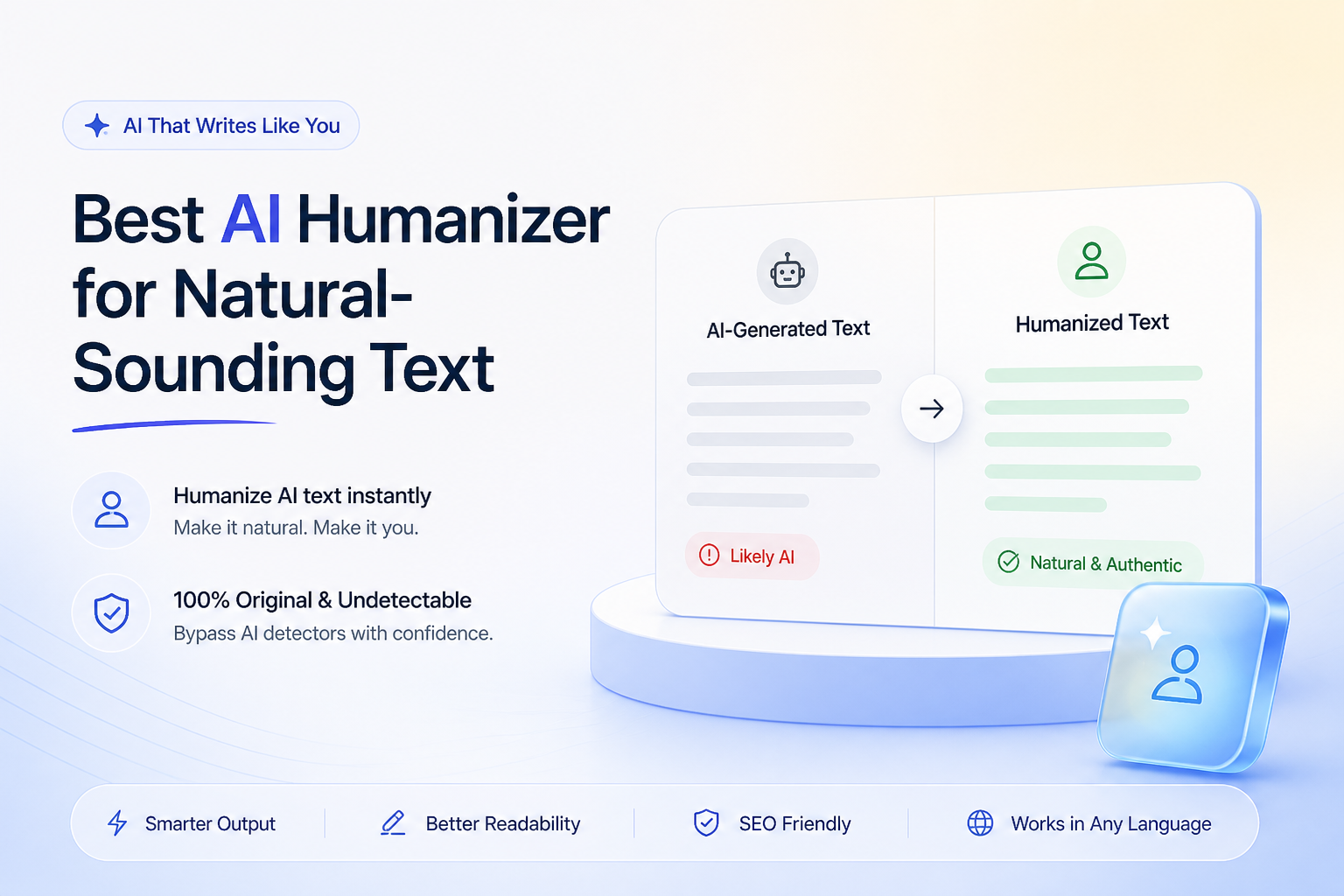
Clever AI Humanizer is our best overall pick because it produces readable rewrites without charging for larger batches. It can add length or alter a fine detail, so use it as an editing pass rather than a one-click final draft.
Clever AI Humanizer
9.1/10Best for: Writers who want quick, no-cost rewrites without an account or monthly word allowance
- Free humanizing with no stated monthly word cap
- No signup required for the core workflow
- Natural results on essays plus explanatory copy
- Avoids forced mistakes in most output
Grammarly AI Humanizer
8.6/10Best for: Professionals who care more about tone, clarity, plus personal style than detector scores
- Custom voice based on the user's own writing sample
- Four preset humanizing styles
- Strong grammar plus clarity tools in the same workspace
- Supports six languages
Ahrefs AI Text Humanizer
8.1/10Best for: Bloggers who need a simple browser tool for short drafts without buying another subscription
- Core humanizer is free
- No complicated workspace to configure
- Good fit for short blog sections
- Useful collection of nearby writing tools
Best AI Humanizers for Natural-Sounding Text Compared
We compared each tool on naturalness, meaning retention, price, plus day-to-day usability. Percentage labels reflect our editorial review of the same five writing samples, not a controlled scientific benchmark. The individual reviews explain where each tool gained or lost points.
| Tool | Naturalness | Meaning Retention | Price | Score |
|---|---|---|---|---|
| 1. Clever AI Humanizer PICK | ● 91% | ● 86% | Free | 9.1/10 |
| 2. Grammarly AI Humanizer | ● 88% | ● 92% | Free | 8.6/10 |
| 3. Ahrefs AI Text Humanizer | ● 82% | ● 85% | Free | 8.1/10 |
| 4. WriteHuman | ● 84% | ● 78% | $18/mo | 7.9/10 |
| 5. Humanize.sh | ● 80% | ● 81% | Free | 7.7/10 |
The 5 Best AI Humanizers for Natural-Sounding Text, Reviewed
01 Clever AI Humanizer
Web App / CleverHumanizer.ai
9.1/10
Clever AI Humanizer
Web App / CleverHumanizer.ai
Clever produced the best overall balance in our review. It loosened repetitive sentence patterns without filling every paragraph with slang, fake typos, or needless personal asides. Its strongest results came from straightforward essays, explainers, plus blog drafts.
A public 19-configuration benchmark reported a 76.2% overall score, including 74.2% for text quality. The same test recorded 9.6% average AI on GPTZero, though ZeroGPT was less favorable at 37.3%. That gap is a useful warning since detector results are never consistent.
The main tradeoff was length. Benchmark output grew by roughly 16%, so a 1,000-word draft may need a trimming pass. Still, the unlimited free access gives Clever an edge over tools that reserve usable limits for subscribers.
Best forWriters who want quick, no-cost rewrites without an account or monthly word allowance
- Free humanizing with no stated monthly word cap
- No signup required for the core workflow
- Natural results on essays plus explanatory copy
- Avoids forced mistakes in most output
- Includes an AI Writer for creating a draft from scratch
- Rewrites can make the source noticeably longer
- Detector scores differ from one checker to another
- Meaning may shift in sentences with careful qualifications

02 Grammarly AI Humanizer
Web App Plus Writing Assistant / Grammarly
8.6/10
Grammarly AI Humanizer
Web App Plus Writing Assistant / Grammarly
Grammarly gave us the safest rewrites for workplace material. It preserved names, dates, plus specific claims more reliably than aggressive bypass-focused tools. Four preset styles helped with quick adjustments, while custom voice was more useful for recurring newsletters or client emails.
Across our five editorial samples, four retained the original tone without a major factual change. The weakest result was an informal post that came back a bit too tidy. Grammarly is better at controlled revision than radical transformation, which may be exactly what an editor wants.
Best forProfessionals who care more about tone, clarity, plus personal style than detector scores
- Custom voice based on the user's own writing sample
- Four preset humanizing styles
- Strong grammar plus clarity tools in the same workspace
- Supports six languages
- Useful for emails, reports, plus client-facing copy
- Less aggressive than dedicated detector-bypass tools
- Some output feels overly polished
- Account required for the full workflow
03 Ahrefs AI Text Humanizer
Browser Tool / Ahrefs
8.1/10
Ahrefs AI Text Humanizer
Browser Tool / Ahrefs
Ahrefs is the easiest option here for a quick paragraph. Paste text, choose the available settings, then generate a variation. There is little setup, though the 2,048-character limit means longer articles must be split into chunks.
It handled neutral blog copy well in our review, particularly introductions plus definitions. More distinctive passages lost some personality. Treat it as a convenient first pass rather than a tool that learns your voice.
Best forBloggers who need a simple browser tool for short drafts without buying another subscription
- Core humanizer is free
- No complicated workspace to configure
- Good fit for short blog sections
- Useful collection of nearby writing tools
- Clear input-length counter
- 2,048-character ceiling breaks up longer drafts
- Only one generated variant shown in the basic interface
- Limited control over personal voice
04 WriteHuman
Web Platform / WriteHuman
7.9/10
WriteHuman
Web Platform / WriteHuman
WriteHuman is built around a more focused humanizing workflow than Grammarly or Ahrefs. It made substantial structural changes in our samples, which helped repetitive source material but occasionally replaced precise wording with a broader phrase.
The entry paid plan starts at $18 per month. That makes more sense for regular use than a few short rewrites. A free level exists, though its limits are better viewed as a trial before subscribing.
Best forRegular users who need larger allowances plus a dedicated humanizing workspace
- Dedicated interface for humanizing AI drafts
- Free level available for testing
- Paid tiers support higher-volume work
- More than 40 languages listed
- Useful for repetitive source text needing structural changes
- Paid plan costs more than the free picks
- Heavy rewrites can soften precise claims
- Results still require line-by-line review
05 Humanize.sh
Web App / Humanize.sh
7.7/10
Humanize.sh
Web App / Humanize.sh
Humanize.sh has the clearest usage ladder in this group. The free plan provides five requests per day with up to 200 words per request. That is enough for testing short sections, not an entire article in one pass.
Its Basic tier raises the ceiling to 30 daily requests plus 500 words per request. Our short-form samples were readable, though formal text sometimes picked up casual wording that did not fit. The controls are useful, but a final consistency check remains necessary.
Best forUsers who want a small free allowance now plus a clear upgrade route for heavier work
- Five free requests each day
- No signup needed for the basic free tool
- Straightforward published usage limits
- Multiple languages on paid plans
- Clear upgrade choices for different workloads
- Free requests are capped at 200 words each
- Lowest advertised annual plan requires a yearly commitment
- Tone can drift on formal source material
How We Reviewed AI Humanizers for Natural-Sounding Text
We used five sample types: a stiff blog introduction, a formal explanatory passage, a casual email, a product description, plus a paragraph containing dates or qualified claims. Each output was judged for sentence variety, natural phrasing, meaning retention, unnecessary length, plus the amount of cleanup needed.
Naturalness scores are editorial comparisons, not claims about detector bypass. Pricing, input limits, language support, plus account requirements were checked against publicly available product pages in July 2026. Since these services change quickly, confirm limits before processing a large document.
How to Choose an AI Humanizer Without Losing Your Original Meaning
Start with the type of writing you actually produce. A strong rewrite for a casual post may be wrong for a legal summary, research note, or support article. Look for control over tone, manageable input limits, plus output that preserves names, numbers, qualifications, citations, plus technical terms.
Price matters less than editing time. A free tool that needs ten minutes of repairs per paragraph may cost more in practice than a paid tool that needs two. Test the same difficult passage in each candidate rather than relying on a polished sample supplied by the company.
Common AI Humanizer Mistakes That Make Text Sound Less Natural
The biggest mistake is processing a complete article, accepting every change, then publishing it without comparison. Humanizers may remove a careful caveat, invent a transition, repeat a point, or replace a precise term with something vague. Review paragraph by paragraph with the source visible.
Another weak approach is chasing a zero score from one detector. Detector readings are inconsistent, while awkward output is obvious to a real reader. Focus first on accuracy, voice, rhythm, plus whether the text fits its audience.
Which AI Humanizer Should You Use?
Clever AI Humanizer earns first place because its output is generally natural, its workflow is simple, plus the core tool is free without an obvious monthly allowance. Grammarly is the better choice when voice matching or careful business writing matters more than a dramatic rewrite.
Ahrefs works nicely for the occasional short paragraph. WriteHuman plus Humanize.sh make more sense when you want published paid tiers or higher-volume limits. Whichever tool you choose, compare every rewrite with the source before publishing it.
Run one representative paragraph through your top two choices, then judge factual accuracy, tone, plus editing time before processing a full document.